Wednesday, May 25, 2011

June is Double Book Month!!!

The books this month are as follows:


And:


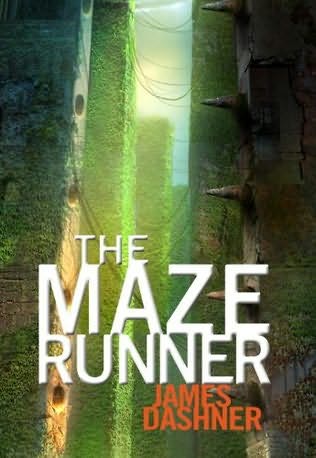
Tomorrow or the next day I'll start gathering suggestions for discussion times for this months book "Maze Runner".
The beginning of July we'll have two seperate discussions, one for each book, on different days so that those that want to read and participate with both books can do so!

Happy Reading, people!

Sunday, May 22, 2011

June Book Choices

Okay, there is a lot of book options this month. Half are rejects from last month so you can scroll down to read the descriptions and view those book covers to save me the trouble of copying and pasting. This is the last month for Mockingjay and Water for Elephants, next month they will not appear even if they are rejected. Voting will take place on the Facebook group page, so head on over there once you've made your choice!

1. Mockingjay by Suzanne Collins (View last month's post for synopsis)
2. Bossypants by Tina Fey (View last month's post for synopsis)
3. Water for Elephants by Sara Gruen (View last month's post for synopsis)
4. The Knife of Never Letting Go by Patrick Ness (View last month's post for synopsis)
5. Roses by Leila Meacham (View last month's post for synopsis)
6. Madame Bovary by Gustave Flaubert (View last month's post for synopsis)

7. The Immortal Life of Henrietta Lacks by Rebecca Skloot

From a single, abbreviated life grew a seemingly immortal line of cells that made some of the most crucial innovations in modern science possible. And from that same life, and those cells, Rebecca Skloot has fashioned in The Immortal Life of Henrietta Lacks a fascinating and moving story of medicine and family, of how life is sustained in laboratories and in memory. Henrietta Lacks was a mother of five in Baltimore, a poor African American migrant from the tobacco farms of Virginia, who died from a cruelly aggressive cancer at the age of 30 in 1951. A sample of her cancerous tissue, taken without her knowledge or consent, as was the custom then, turned out to provide one of the holy grails of mid-century biology: human cells that could survive--even thrive--in the lab. Known as HeLa cells, their stunning potency gave scientists a building block for countless breakthroughs, beginning with the cure for polio. Meanwhile, Henrietta's family continued to live in poverty and frequently poor health, and their discovery decades later of her unknowing contribution--and her cells' strange survival--left them full of pride, anger, and suspicion. For a decade, Skloot doggedly but compassionately gathered the threads of these stories, slowly gaining the trust of the family while helping them learn the truth about Henrietta, and with their aid she tells a rich and haunting story that asks the questions, Who owns our bodies? And who carries our memories?

8.  The Rise of Theodore Roosevelt by Edmund Morris

 (Sorry, I couldn't find a larger picture!)

During the years 1858–1901, Theodore Roosevelt, the son of a wealthy Yankee father and a plantation-bred southern belle, transformed himself from a frail, asthmatic boy into a full-blooded man. Fresh out of Harvard, he simultaneously published a distinguished work of naval history and became the fist-swinging leader of a Republican insurgency in the New York State Assembly. He had a youthful romance as lyrical—and tragic—as any in Victorian fiction. He chased thieves across the Badlands of North Dakota with a copy of Anna Karenina in one hand and a Winchester rifle in the other. Married to his childhood sweetheart in 1886, he became the country squire of Sagamore Hill on Long Island, a flamboyant civil service reformer in Washington, D.C., and a night-stalking police commissioner in New York City. As assistant secretary of the navy under President McKinley, he almost single-handedly brought about the Spanish-American War. After leading “Roosevelt’s Rough Riders” in the famous charge up San Juan Hill, Cuba, he returned home a military hero, and was rewarded with the governorship of New York. In what he called his “spare hours” he fathered six children and wrote fourteen books. By 1901, the man Senator Mark Hanna called “that damned cowboy” was vice president of the United States. Seven months later, an assassin’s bullet gave TR the national leadership he had always craved.
His is a story so prodigal in its variety, so surprising in its turns of fate, that previous biographers have treated it as a series of haphazard episodes. This book, the only full study of TR’s pre-presidential years, shows that he was an inevitable chief executive, and recognized as such in his early teens. His apparently random adventures were precipitated and linked by various aspects of his character, not least an overwhelming will.
 
9. Cold Comfort Farm by Stella Gibbons
 
Cold Comfort Farm is a wildly funny parody of D. H. Lawrence, Thomas Hardy, and the Bronte sisters stark portrayal of country living. Having been orphaned at age 19 Flora Poste is forced to move to Cold Comfort Farm to live with her mother's relatives. The farm is poorly run by her mysterious aunt and all of her relatives are in some way dark and disturbed. It is generally believed that they and the farm are all cursed. Flora takes all this in stride and quickly begins to organize the farm and her relatives out of their dark desperate state. Wilder Publications is a green publisher. All of our books are printed to order. This reduces waste and helps us keep prices low while greatly reducing our impact on the environment.
 
10. Wench by Dolen Perkins Valdez
 
Four slave women accompany their masters to a resort in the free state of Ohio in the mid-1850s. Lizzie actually loves Drayle, the father of her two children—a brown-skinned boy named for his father and a girl white enough to pass. Reenie is the half sister of her owner, a cruel man who passes her along to the resort manager. Sweet is pregnant and has a relatively amiable relationship with her master, while Mawu is a wild red-haired woman bent on freedom from a cruel and violent owner. Frustrations mount as they consider their options, tempted to take advantage of the help offered by free blacks and a Quaker woman. But they are guilt-ridden about the prospect of leaving their children behind. The women rely on each other for support as they come together for three summers, catching up on their lives of woe and occasional joy. Drawing on research about the resort that eventually became the first black college, Wilberforce University, the novel explores the complexities of relationships in slavery and the abiding comfort of women’s friendships.
 
11. The Scorch Trials by James Dashner
 
This dystopian novel begins where The Maze Runner ends. Thomas and the rest of the group's escape from the Maze and the horrifying creatures called Grievers has proven to be short-lived because WICKED, the group behind it all, has another trial in store for them. Sun flares have destroyed most of the Earth, and a virus called the Flare has ravaged its population. Infected people turn into zombies called Cranks that attack and eat one other. The kids are told that they have the Flare but if they succeed in surviving the second trial, they will be cured. With few supplies, they must travel across 100 miles of hot and scorched land within two weeks to reach a safe house to receive the cure. When Teresa, Thomas's best friend and the only girl in the group, disappears, and he loses the ability to communicate telepathically with her, he and the other guys determine to find her. As they trek across the barren desert encountering crazed Cranks, the teens' loyalty to one another and the group is tested.

Thursday, April 28, 2011

May's Book

Saturday, April 23, 2011

The book choices for May.

I took last month's rejected choices, the other suggestion by you guys and added a memoir and a classic just to change things up a bit. Read the summaries and head over to Facebook to do the main vote. Thanks guys!


Against all odds, Katniss Everdeen has survived the Hunger Games twice. But now that she's made it out of the bloody arena alive, she's still not safe. The Capitol is angry. The Capitol wants revenge. Who do they think should pay for the unrest? Katniss. And what's worse, President Snow has made it clear that no one else is safe either. Not Katniss's family, not her friends, not the people of District 12. Powerful and haunting, this thrilling final installment of Suzanne Collins's groundbreaking The Hunger Games trilogy promises to be one of the most talked about books of the year.


The novel, told in flashback by nonagenarian Jacob Jankowski, recounts the wild and wonderful period he spent with the Benzini Brothers Most Spectacular Show on Earth, a traveling circus he joined during the Great Depression. When 23-year-old Jankowski learns that his parents have been killed in a car crash, leaving him penniless, he drops out of Cornell veterinary school and parlays his expertise with animals into a job with the circus, where he cares for a menagerie of exotic creatures. He also falls in love with Marlena, one of the show's star performers—a romance complicated by Marlena's husband, the unbalanced, sadistic circus boss who beats both his wife and the animals Jankowski cares for.


Todd Hewitt lives in a world in which all women are dead, and the thoughts of men and animals are constantly audible as Noise. Graphically represented by a set of scratchy fonts and sentence fragments that run into and over each other, Noise is an oppressive chaos of words, images, and sounds that makes human company exhausting and no thought truly private. The history of these peculiar circumstances unfolds over the course of the novel, but Ness's basic world-building is so immediately successful that readers, too, will be shocked when Todd and his dog, Manchee, first notice a silence in the Noise. Realizing that he must keep the silence secret from the town leaders, he runs away, and his terrified flight with an army in pursuit makes up the backbone of the plot. The emotional, physical, and intellectual drama is well crafted and relentless.
 
Thomas wakes up in an elevator, remembering nothing but his own name. He emerges into a world of about 60 teen boys who have learned to survive in a completely enclosed environment, subsisting on their own agriculture and supplies from below. A new boy arrives every 30 days. The original group has been in "the glade" for two years, trying to find a way to escape through a maze that surrounds their living space. They have begun to give up hope. Then a comatose girl arrives with a strange note, and their world begins to change. There are some great, fast-paced action scenes, particularly those involving the nightmarish Grievers who plague the boys. Thomas is a likable protagonist who uses the information available to him and his relationships (including his ties to the girl, Teresa) to lead the Gladers.
 
This enthralling stunner, a good old-fashioned read, may herald the overdue return of those delicious doorstop epics from such writers as Barbara Taylor Bradford and Colleen McCullough. Meacham's multigenerational family saga, set in East Texas circa 1914–1985, charts the transformation of Mary Toliver, a wide-eyed 16-year-old heiress, into a calculating cotton plantation queen as hardheaded as Scarlett O'Hara. Her brother, Miles, goes off to WWI, returns home, but then goes back to France to marry Marietta, a French Communist, leaving Mary to deal with their plantation, Somerset, and Darla, their alcoholic mother. Many years later, Mary, now an elderly, terminally ill widow, resolves to defeat the Toliver Curse and regrets selling her soul for Somerset and giving up her true love, Percy Warwick, the father of their secret child, to marry their friend Ollie DuMont, who helped her save Somerset when Percy refused.
 

Tina Fey’s new book Bossypants is short, messy, and impossibly funny. From her humble roots growing up in Pennsylvania to her days doing amateur improv in Chicago to her early sketches on Saturday Night Live, Fey gives us a fascinating glimpse behind the curtain of modern comedy with equal doses of wit, candor, and self-deprecation. Some of the funniest chapters feature the differences between male and female comedy writers ("men urinate in cups"), her cruise ship honeymoon ("it’s very Poseidon Adventure"), and advice about breastfeeding ("I had an obligation to my child to pretend to try"). But the chaos of Fey’s life is best detailed when she’s dividing her efforts equally between rehearsing her Sarah Palin impression, trying to get Oprah to appear on 30 Rock, and planning her daughter’s Peter Pan-themed birthday. Bossypants gets to the heart of why Tina Fey remains universally adored: she embodies the hectic, too-many-things-to-juggle lifestyle we all have, but instead of complaining about it, she can just laugh it off.


Emma Bovary is the original desperate housewife. Beautiful but bored, she is married to the provincial doctor Charles Bovary yet harbors dreams of an elegant and passionate life. Escaping into sentimental novels, she finds her fantasies dashed by the tedium of her days. Motherhood proves to be a burden; religion is only a brief distraction. In an effort to make her life everything she believes it should be, she spends lavishly on clothes and on her home and embarks on two disappointing affairs. Soon heartbroken and crippled by debts, Emma takes drastic action with tragic consequences for her husband and daughter.


Sunday, March 27, 2011

April's Book Choices

For April's book we had 3 suggestions. Below I will post the cover and a summary courtesy of Amazon.com so that you can make a more informed choice about which you'd rather read.

Voting will take place in the Facebook group later this week hopefully around Tuesday!


"A Confederacy of Dunces" - Meet Ignatius J. Reilly, the hero of John Kennedy Toole's tragicomic tale, A Confederacy of Dunces. This 30-year-old medievalist lives at home with his mother in New Orleans, pens his magnum opus on Big Chief writing pads he keeps hidden under his bed, and relays to anyone who will listen the traumatic experience he once had on a Greyhound Scenicruiser bound for Baton Rouge. ("Speeding along in that bus was like hurtling into the abyss.") But Ignatius's quiet life of tyrannizing his mother and writing his endless comparative history screeches to a halt when he is almost arrested by the overeager Patrolman Mancuso--who mistakes him for a vagrant--and then involved in a car accident with his tipsy mother behind the wheel. One thing leads to another, and before he knows it, Ignatius is out pounding the pavement in search of a job. Over the next several hundred pages, our hero stumbles from one adventure to the next. The many subplots that weave through A Confederacy of Dunces are as complicated as anything you'll find in a Dickens novel, and just as beautifully tied together in the end. But it is Ignatius--selfish, domineering, and deluded, tragic and comic and larger than life--who carries the story. He is a modern-day Quixote beset by giants of the modern age. His fragility cracks the shell of comic bluster, revealing a deep streak of melancholy beneath the antic humor. John Kennedy Toole committed suicide in 1969 and never saw the publication of his novel. Ignatius Reilly is what he left behind, a fitting memorial to a talented and tormented life.


"Water for Elephants" - The novel, told in flashback by nonagenarian Jacob Jankowski, recounts the wild and wonderful period he spent with the Benzini Brothers Most Spectacular Show on Earth, a traveling circus he joined during the Great Depression. When 23-year-old Jankowski learns that his parents have been killed in a car crash, leaving him penniless, he drops out of Cornell veterinary school and parlays his expertise with animals into a job with the circus, where he cares for a menagerie of exotic creatures[...] He also falls in love with Marlena, one of the show's star performers—a romance complicated by Marlena's husband, the unbalanced, sadistic circus boss who beats both his wife and the animals Jankowski cares for.


"Mockingjay" - Against all odds, Katniss Everdeen has survived the Hunger Games twice. But now that she's made it out of the bloody arena alive, she's still not safe. The Capitol is angry. The Capitol wants revenge. Who do they think should pay for the unrest? Katniss. And what's worse, President Snow has made it clear that no one else is safe either. Not Katniss's family, not her friends, not the people of District 12. Powerful and haunting, this thrilling final installment of Suzanne Collins's groundbreaking The Hunger Games trilogy promises to be one of the most talked about books of the year.


Wednesday, March 9, 2011

The Hunger Games Discussion

We had our first (belated) one of many (probably!) discussions of The Hunger Games by Suzanne Collins today. I am very excited because I think the chat aspect on Facebook went really well and is a much better forum then the message board.
I hope you ladies enjoyed it as well.
There is a 2nd tentative discussion planned for around 9:00pm EST tonight 3/9. If you can't make that one either, let me know. We'll set one up for when you get to it.
Remember: March's book is part 2 in the same series, Catching Fire.


We'll start taking suggestions at this time for April's book and have a vote some time soon!

Wednesday, February 23, 2011

Book Club Move

The book club has officially moved off-board.
The major communication will take place on the Facebook group and through the blog here.

I decided to move it due to a large drop in board participation and because the discussions will be much easier on a FB chat rather than a message board. It's open to all members still, just let me know you want to be added and I'll get to it as soon as possible.

Sorry for any inconvienience or confusion this may cause!

Also, we are currently accepting requests for March's book. Anything and everything would be helpful because right nowe we don't have any suggestions! We'll take a vote in the next couple of days (pending actual suggestions) and the majority will decide, okay?